Space-Saving Nightstand Alternatives for Small Apartments
August 16, 2025
How to Create a Relaxing Bedroom in a Small Space
August 20, 2025Shoe Storage Hacks for Small Bedrooms That Work

Hide your shoes in plain sight with a chic storage ottoman.
The Struggle Is Real: Why Shoe Storage Feels Impossible in Small Bedrooms
When you live in a small bedroom, space is like gold — and shoes, somehow, are always the troublemakers.
They’re bulky yet fragile, they come in all shapes, and they can be mess magnets.
If you’ve ever dug under your bed in a morning rush, only to find one sneaker instead of two, you know exactly what I mean.
The problem is compounded by the fact that modern living spaces are shrinking. According to RentCafe, the average U.S. apartment has dropped to 849 square feet, with studios averaging 388 square feet (RentCafe). That means your bedroom is often competing with other needs — home office, storage, and even laundry — for every inch.
And our shoe collections? They’re not getting smaller.
Data from RunRepeat shows that women own an average of 19 pairs, and men 12 pairs (RunRepeat). That’s over three dozen shoes in a couple’s apartment — without counting kids’ shoes.
The good news? With the right approach, you can turn shoe chaos into a system that actually works — without blowing your budget or drilling into your landlord’s walls.

Psychology of Clutter: How Messy Shoes Impact Your Stress Levels
Clutter isn’t just an eyesore; it has measurable effects on mental health. Shoes scattered across a small apartment may seem trivial, but research shows that disorganized environments can negatively impact stress and well-being.
A notable 2019 study by UCLA’s Center on Everyday Lives and Families found that people in cluttered homes had higher cortisol levels, a key stress hormone, compared to those in organized spaces. The visual chaos triggers a subconscious feeling of overwhelm, making it harder to focus and relax.
For small apartment dwellers, where every square foot counts, cluttered shoe piles can exacerbate this stress. Conversely, having a designated, organized shoe system can create a sense of order and calm, even in a compact home.
By investing a little effort into shoe organization, you’re not just improving your space aesthetically—you’re supporting your mental health and daily peace of mind.
The Five Commandments of Small-Space Shoe Storage

Before diving into solutions, here are the golden rules that make any storage system succeed long-term:
- Store by Priority — Keep your most-worn shoes at arm’s reach; special occasion shoes can live in less accessible spots.
- Think Vertical — Floors get messy fast; walls, doors, and closet heights are your friends.
- Make It Dual-Purpose — If it can store shoes and serve another function, you’ve just doubled your win.
- Keep It Effortless — If storage takes more than a few seconds, it won’t become a habit.
- Protect Your Shoes — Use breathable fabrics, cedar, and proper shapes to keep them fresh and undamaged.
10 Budget-Friendly Hacks That Actually Work
These aren’t just Pinterest-pretty ideas — they’re tested, practical, and realistic for renters, students, and small-space dwellers.
Hack #1: Over-the-Door Organizers

- What It Is: Hanging fabric or plastic organizers with multiple pockets.
- Why It Works: Turns unused door space into instant shoe storage.
- Real-Life Example: Maya, a Brooklyn renter, keeps her daily sneakers and flats in a 24-pocket clear vinyl organizer. “It’s like a shoe vending machine,” she says.
- Pro Tip: Go for mesh or clear pockets to see each pair without guessing.
- Budget: $10–$20 for a 20–24 pocket version on Amazon or Target.
Hack #2: Under-Bed Rolling Drawers

- What It Is: Low-profile drawers or bins on wheels.
- Why It Works: Perfect for off-season or rarely worn shoes.
- Product Pick: IKEA SKUBB bins (~$8) fit under most beds.
- Pro Tip: Add cedar sachets or baking soda pouches to fight odors.
- Budget: $8–$25 depending on size.
if Want more smart ideas? Check out The Under Bed Storage Revolution for creative hacks to make every inch count.
Hack #3: Floating Shelves for Display

- What It Is: Narrow wall-mounted shelves.
- Why It Works: Doubles as storage and wall décor for your favorites.
- Real-Life Example: Daniel, a sneaker collector, uses IKEA Lack shelves above his desk to showcase limited-edition pairs.
- Pro Tip: Install at a slight angle to keep shoes from sliding.
- Budget: $6–$12 per shelf.
Hack #4: Stackable Multi-Tier Shoe Racks

- What It Is: Vertical racks with 3–5 tiers.
- Why It Works: Stores more shoes without using more floor space.
- Pro Tip: Adjustable tiers fit heels, boots, and flats in one unit.
- Budget: $20–$35 online.
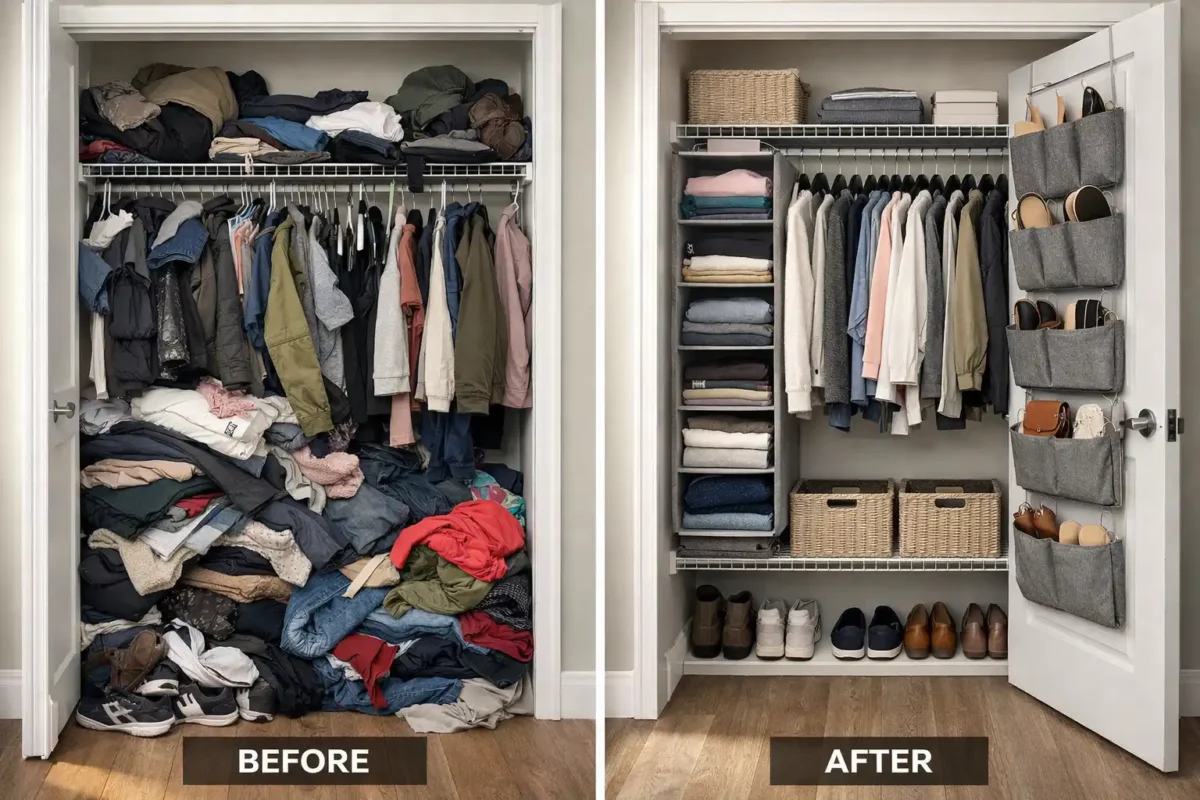
Hack #5: Hanging Closet Shoe Shelves

- What It Is: Fabric shelving that hangs from closet rods.
- Why It Works: Great for sneakers and flats, especially in shared closets.
- Pro Tip: Assign one shelf for each category (work, casual, dressy).
- Budget: $15–$25 for a 6–10 tier model.
Hack #6: Repurposed Bookshelves

- What It Is: A small bookshelf turned into a shoe cubby.
- Why It Works: Affordable, and you can customize it to fit.
- Real-Life Example: Sophie, a college student, bought a $15 thrifted shelf, painted it white, and now stores 12 pairs neatly.
- Pro Tip: Line shelves with wipeable contact paper for easy cleaning.
- Budget: $15–$40 depending on source.
Hack #7: Pegboard Shoe Wall

- What It Is: Pegboard with hooks or mini shelves.
- Why It Works: Customizable and renter-friendly if mounted with removable strips.
- Pro Tip: Use one hook per shoe to save space.
- Budget: $10–$20 for pegboard + hardware.
Hack #8: Shoe Storage Ottoman

- What It Is: An ottoman with a hollow interior.
- Why It Works: Dual-purpose seating and hidden storage.
- Product Pick: SONGMICS ottoman bench with divided shoe slots (~$45).
- Budget: $25–$50.
Hack #9: Clear Drop-Front Shoe Boxes

- What It Is: Stackable boxes with a front-opening door.
- Why It Works: Lets you grab shoes without unstacking everything.
- Pro Tip: Limit stacks to 4–5 high for safety.
- Budget: $1–$3 per box.
Hack #10: Seasonal Rotation Bins

- What It Is: Fabric bins or cedar chests for off-season shoes.
- Why It Works: Keeps active shoe area minimal and organized.
- Pro Tip: Label bins with photos for easy identification.
- Budget: $15–$40.
Shoe Care: How Storage Affects Longevity

Proper shoe storage isn’t just about keeping your living space tidy—it plays a crucial role in preserving your footwear and extending its lifespan.
For example, storing boots upright helps prevent unsightly creasing and sagging. Using boot shapers or even rolled-up magazines inside boots can maintain their shape, avoiding permanent wrinkles or collapse. Similarly, shoes stored flat or piled on top of one another risk being crushed, warped, or scratched.
Beyond shape preservation, the environment inside your storage matters. Shoes kept in breathable containers with cedar inserts or silica gel packs avoid moisture buildup, which can cause mold, mildew, and material degradation. Avoid airtight plastic bins that trap humidity, especially for leather or suede shoes.
Regular rotation and airing out are also key. Shoes worn daily last longer when given 24 hours to breathe between uses, reducing sweat buildup and odor.
In summary: Thoughtful storage techniques—upright positioning, breathable materials, and rotation—help your shoes look better and last longer, protecting your investment and keeping your small space fresh.
Keeping Your System Alive: Maintenance That Works
The best shoe storage systems fail when maintenance isn’t built in. Here’s how to keep yours working:
- Weekly: Put shoes away the day you wear them.
- Monthly: Rotate seasonal shoes and refresh odor control.
- Quarterly: Purge shoes you haven’t worn in six months — donate or resell.
Common Pitfalls (And How to Avoid Them)
| Mistake | Why It’s Bad | Quick Fix |
|---|---|---|
| Storing shoes in airtight bins | Traps moisture, causes mold | Use breathable containers |
| Piling shoes together | Warps shape, scratches finish | Use separators or boxes |
| Keeping all shoes out year-round | Creates clutter | Use seasonal storage |
Why These Hacks Work (The Design Logic)
Here’s the design thinking behind these strategies, so you understand why they’re effective.These strategies aren’t random — they’re rooted in space optimization and habit psychology:
- Vertical use: Maximizes cubic space in a small room.
- Dual-purpose furniture: Reduces overall furniture footprint.
- Breathable storage: Extends shoe lifespan.
- Effortless retrieval: Encourages consistent use.
Renter-Friendly Fixes: Easy, Damage-Free Storage Solutions

If you’re renting, the last thing you want is to risk your security deposit with holes or permanent fixtures. Luckily, there are many renter-friendly tools that help you maximize shoe storage without damaging walls or doors.
- Command Strips and Hooks: These adhesive products can hold lightweight shoe organizers or hangers on walls or doors. They’re easy to install and remove without residue, perfect for over-the-door organizers or lightweight racks.
- Tension Rods: Adjustable tension rods fit inside closets or small alcoves without screws. Use them to hang boots, create shelf dividers, or support hanging shoe organizers.
- Over-the-Door Racks: These require no installation and simply hook over existing doors, providing vertical shoe storage without a footprint.
- Freestanding Shoe Racks: Slim, portable racks can fit in corners or under furniture and move easily when you relocate.
When choosing solutions, prioritize lightweight and temporary fixtures that respect rental agreements while maximizing your shoe storage options.
Want even more space-saving inspiration? Check out our Ultimate Guide to Small Space Organization for dozens of clever ideas to make every inch count.
Final Word: Your Shoes, Your Space, Your Style
Organizing shoes in a small bedroom isn’t about buying expensive organizers — it’s about designing a system that fits your life.
Maybe for you that’s an under-bed drawer plus a hanging organizer. Or maybe it’s a floating shelf display for your sneaker collection paired with seasonal bins.
The key is choosing sustainable solutions that work with your habits, not against them.
And remember — good shoe storage isn’t just about order, it’s about time saved, stress reduced, and shoes that last years longer.