How to Declutter a Tiny Bedroom Without Stress
August 26, 2025
DIY Cardboard Under Bed Storage | Budget & Renter Friendly Hacks
August 30, 202515 Minimalist Bedroom Storage Ideas with Real Stats and Renter-Friendly Hacks

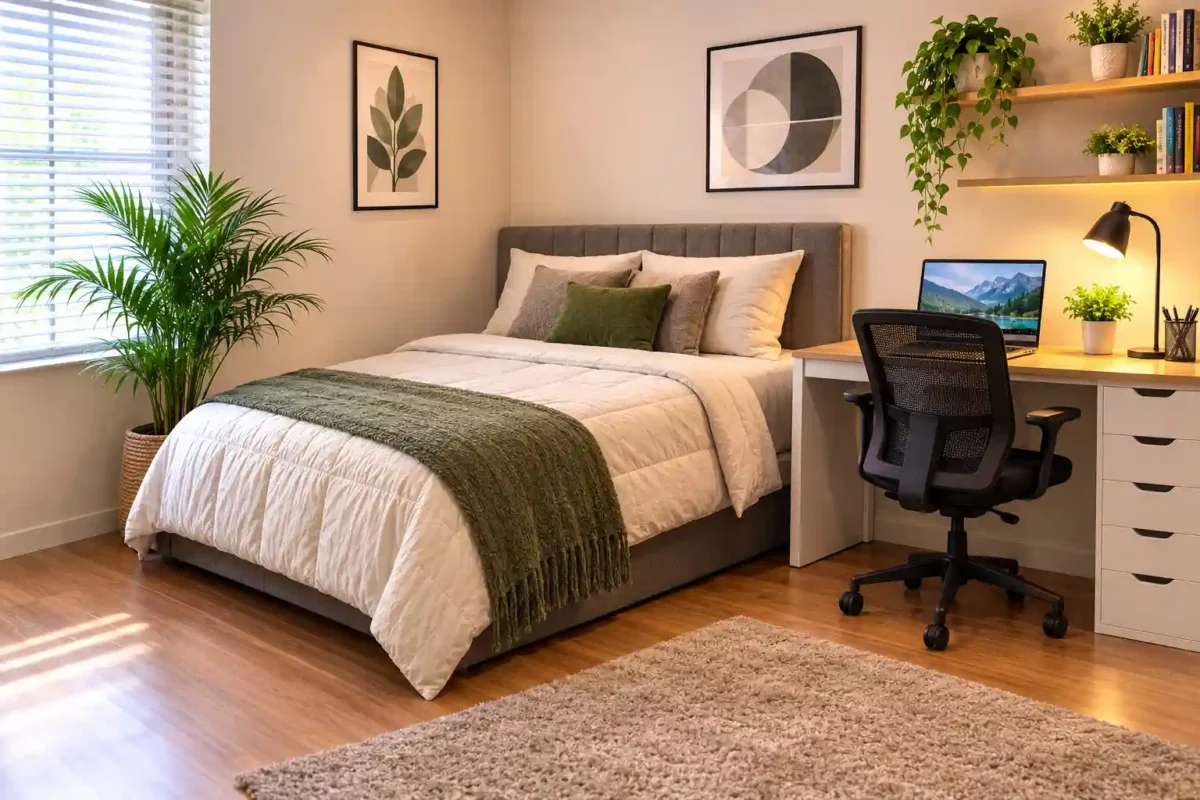
Smart beds and dual-purpose furniture provide ample storage while keeping your small bedroom airy and uncluttered.
FTC Disclosure: This post includes affiliate links. If you purchase through them, I may earn a small commission at no extra cost to you. Thanks for supporting our work.
Why Clutter Isn’t Just Annoying—It’s Stressful (and How Storage Fixes That)
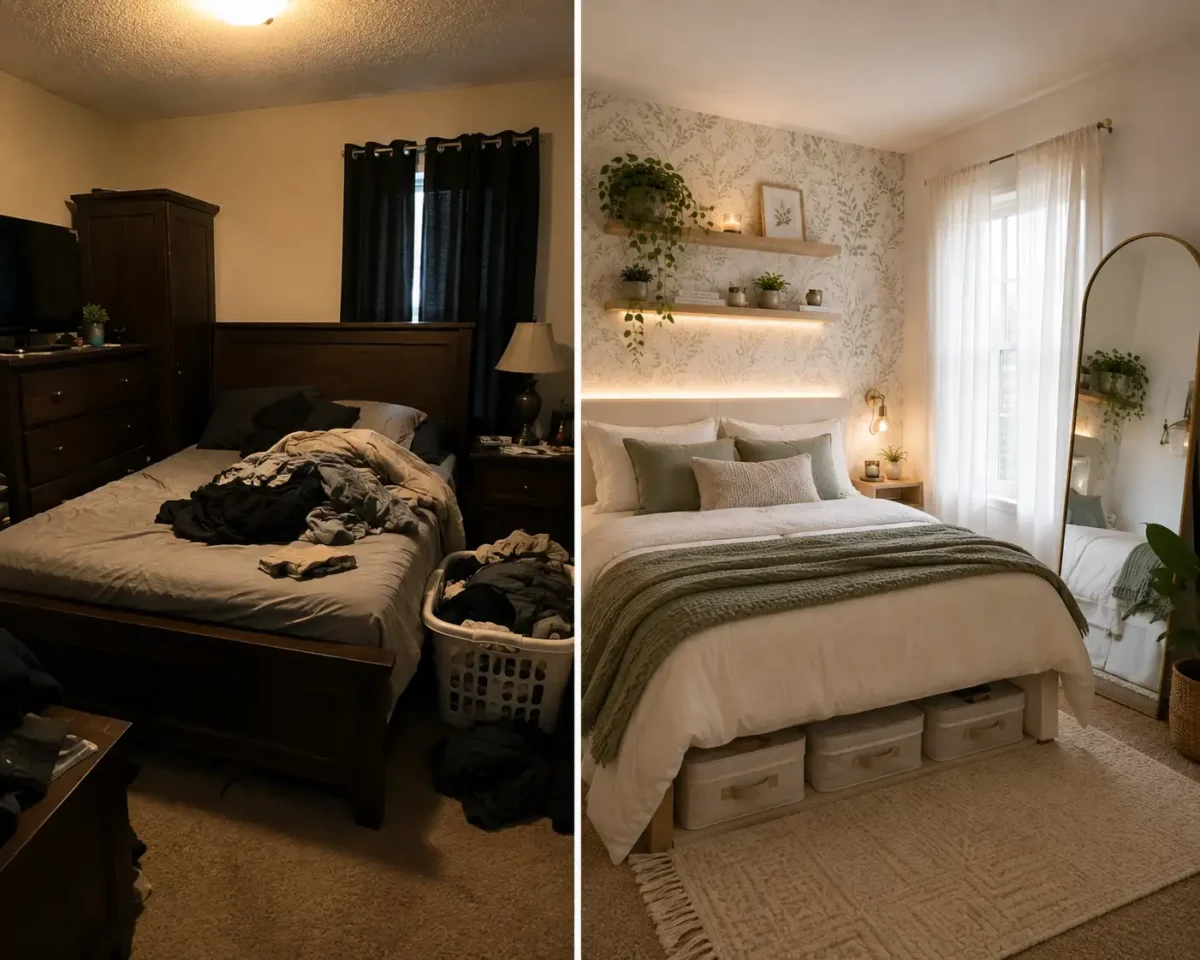
You want a minimalist bedroom—but clutter sneaks in, stress builds, and suddenly your relaxing space feels chaotic. You’re not imagining things:
- 80% of Americans feel overwhelmed by clutter in their homes (WifiTalents).
- 54% are unsure what to do about it, and 54% feel stressed enough that it affects their mood (Kathy McEwan, Real Simple).
- Research shows women living in cluttered homes had elevated cortisol levels, the stress hormone .
- Meanwhile, the average American spends 2.5 days a year searching for lost items—fully 3,680 hours total—just due to clutter.
Clearly, better storage isn’t just about tidiness—it’s about reclaiming peace of mind. Let’s dive into 15 practical, renter-friendly storage solutions.
1. Create Room with Under-Bed Storage

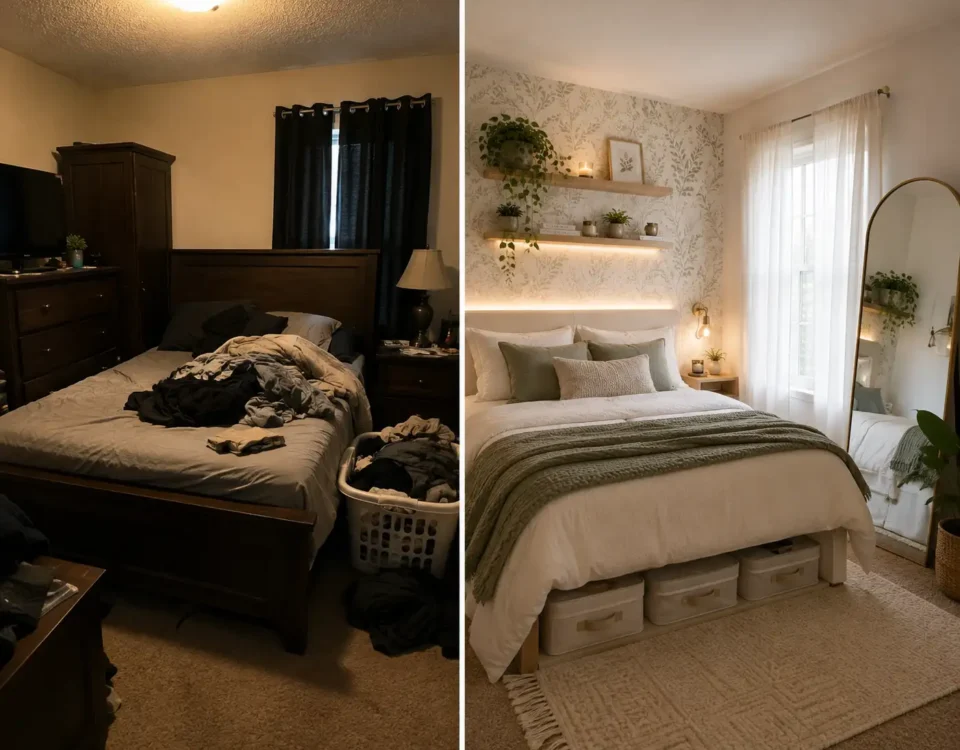
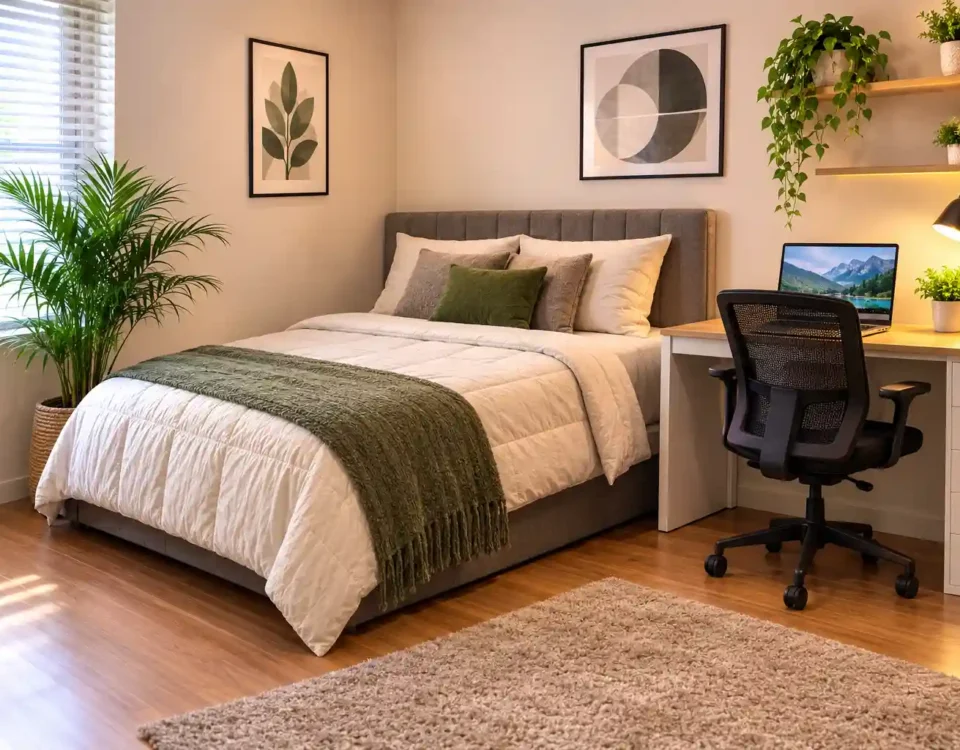
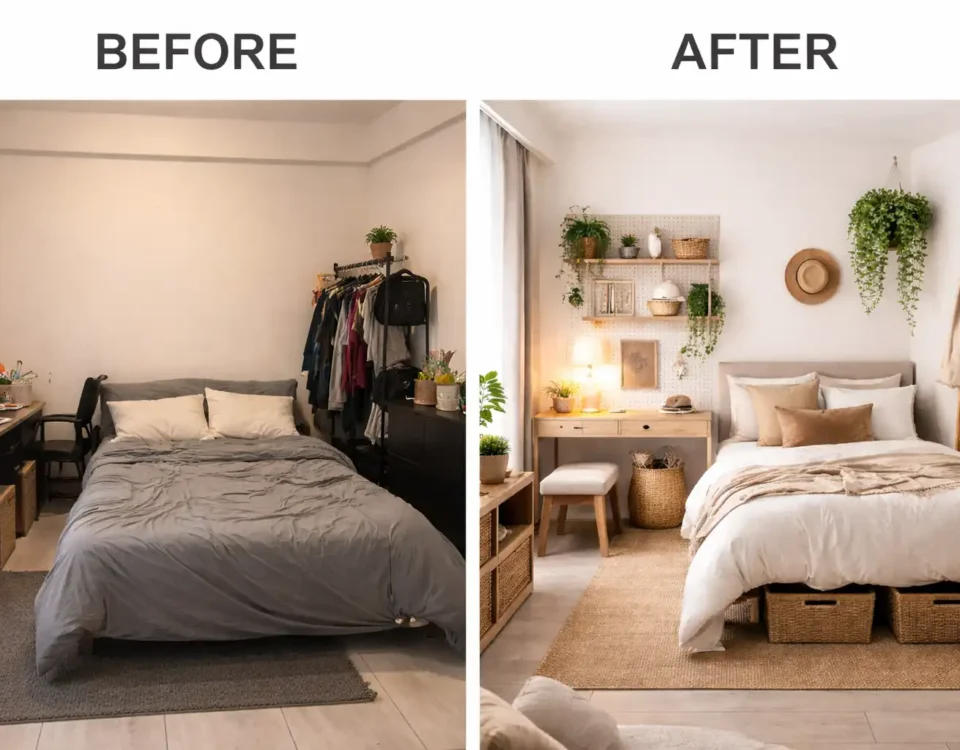
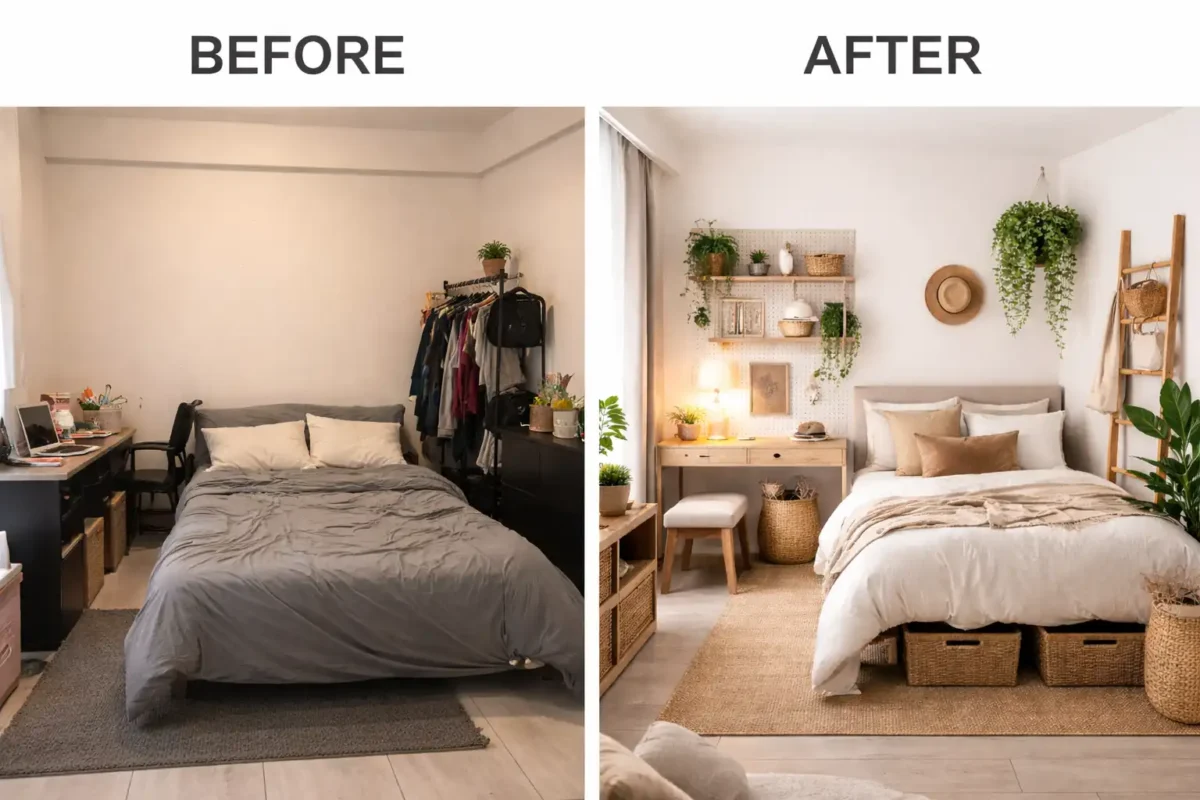
Under-bed space is often overlooked, but it can be a game-changer in small bedrooms. Storage beds with built-in drawers are perfect for keeping linens or shoes neatly tucked away. If you’re renting, rolling bins are a quick win that slide in and out with ease. And for bulky bedding, vacuum storage bags can shrink items by up to 80%, saving a surprising amount of room.
These little adjustments don’t just clear space—they also help your room feel more open and airy. If that’s your goal, you might enjoy reading our tips on how to make a small bedroom look bigger with smart storage tricks, where we go beyond under-bed solutions to other clever design moves.
2. Go Vertical: Floating Shelves & Wall Storage

When floor space is limited, walls become your best friend.
- Floating shelves hold books and décor without cluttering furniture.
- Peg rails and mirror-storage combos add function and style.
- Keep shelf depth around 8–10 inches for a sleek, minimalist look.
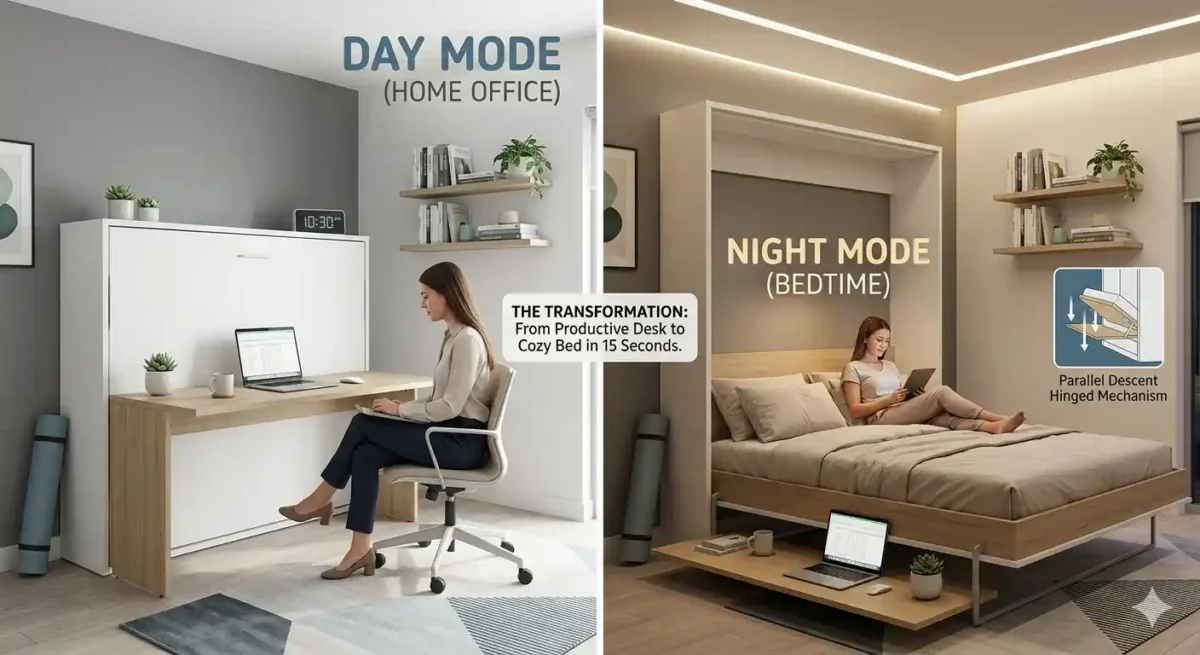
3. Dual-Purpose Furniture: Save Space, Twice
Furniture that pulls double duty is pure smart design:
- Storage benches give you hidden storage and extra seating.
- Headboards with built-in shelves keep essentials close at hand.
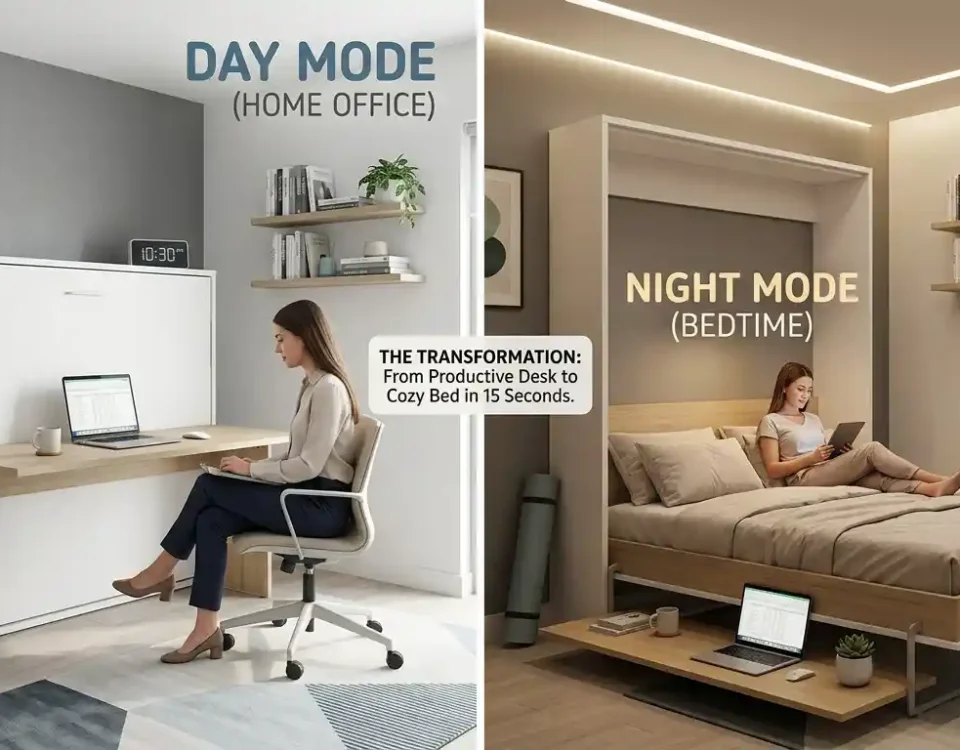
- Fold-down desks provide workspace only when you need it.
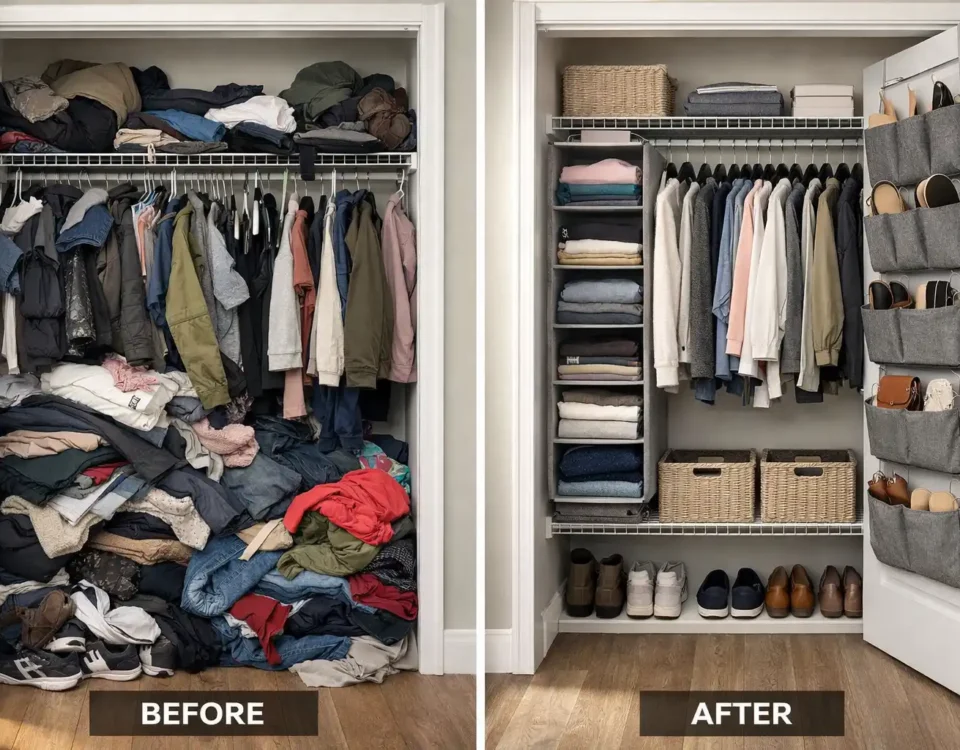
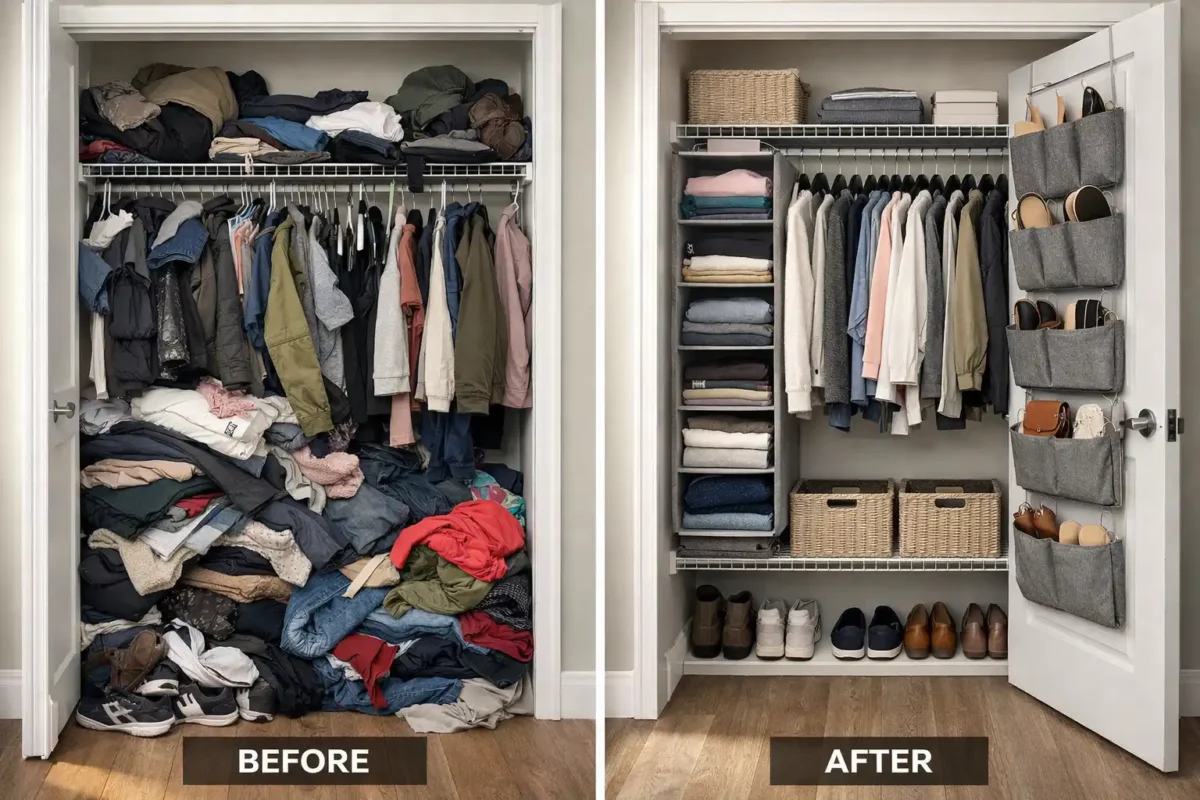
4. Optimize Drawers & Closets from Within
Organize smarter—not just more.
- Use drawer dividers to separate accessories and garments.
- Slimline hangers save closet space and keep clothing crisp.
- Label bins clearly to maintain order and reduce clutter creep.
5. Hide It or Raise It
Maximizing under-bed space can unlock up to 30 cubic feet of hidden storage in an average-sized bed frame—space that often goes completely unused. You have two main options: hide it or raise it.
- Hide it with fitted bed skirts, rolling drawers, or zipped fabric bins to keep dust out and maintain a clean, minimalist look. This works best if you want the area to visually “disappear.”
- Raise it by using bed risers or investing in a lofted frame. Even a 6-inch lift can create enough room for storage crates or seasonal clothing boxes, without making the bed feel awkwardly high.
For renters, these methods are cost-effective, completely reversible, and require no permanent alterations. As organization expert Marie Kondo notes, “Vertical space is your friend—use it wisely.” By reclaiming what’s under your bed, you free up closet and dresser space for everyday essentials.
6. Magnetic Bedside Caddy

A magnetic bedside caddy is a renter-friendly upgrade for keeping essentials within arm’s reach—without drilling or cluttering your nightstand. These caddies attach to metal bed frames or headboards using strong magnets, making installation tool-free and damage-free.
Perfect for holding your phone, glasses, remote, or a small book, they help keep surfaces clear and nighttime routines more organized. Since they can be removed in seconds, they’re ideal for renters who may need to rearrange furniture or move apartments. For rooms where every inch counts, this simple add-on can free up valuable tabletop space and reduce visual clutter.
7. Modular Crate Stacking
Lightweight modular crates are one of the most flexible storage solutions for small bedrooms. They can be stacked vertically to make the most of unused wall height, arranged side-by-side to create a makeshift dresser, or tucked under a loft bed for hidden storage.
The best part? They’re easy to reconfigure when your needs change—no tools required. For renters, this means you can adapt your setup for a new room layout without spending extra money. Clear or open-sided crates also make it easier to see and grab what you need, cutting down the time you spend rummaging.
8. Renter Success: IKEA MALM Storage Bed
Meet Sarah—a student in a 300 sq ft studio. She swapped her old frame for an IKEA MALM storage bed.
“It was a game-changer—suddenly my winter coats, extra bedding, and even my sewing kit had a place. My floor felt twice as big.”
9. A Reddit Tip That Resonates
From r/Organizing:
“Wall shelving is a good way to get more storage built-in without losing any floor space. Even one shelf above the door can store off-season decor.” (Reddit)
That speaks: vertical, subtle, effective.
10. Tackle Clutter Creep with Smart Habits
Clutter rarely appears overnight—it “creeps” in gradually through small, unchecked habits. This phenomenon, known among professional organizers as clutter creep, happens when items don’t have a designated home, or when putting them away feels inconvenient. Over time, it snowballs into an overwhelming mess.
A 2023 StorageCafé study found that 54% of Americans feel stressed by clutter in their homes, with 31% admitting they’ve avoided hosting guests due to disorganization. The key to stopping clutter creep isn’t buying more storage—it’s building micro-habits that keep clutter from forming in the first place.
Proven Habits to Stop Clutter Creep
- The One-Minute Rule – If it takes less than one minute, do it immediately (e.g., hanging a coat, putting dishes in the dishwasher).
- Daily Reset – Spend 5–10 minutes each evening returning items to their designated spots.
- In/Out Rule – For every new item that comes in, remove one item from your space.
- Visible Zones – Keep high-traffic areas clear so clutter is spotted and addressed early.
Expert Insight
Minimalist coach Dana White notes, “Clutter grows in proportion to the delay between use and putting away. Shortening that delay is the single most powerful habit change.”
Small-Space Tip
In a small bedroom, clutter creep is amplified because every surface is visible. Using open baskets for ‘in-progress’ items (like unread mail or laundry to be folded) keeps them corralled without creating visual chaos.
11. Leggy Furniture Keeps Space Light

When your bedroom is small, bulky furniture that sits flush to the floor can make the room feel cramped. Leggy furniture, such as mid-century modern nightstands or elevated platform beds, creates a sense of openness by allowing light to pass underneath.
According to a 2023 Houzz design trends survey, 41% of homeowners in small spaces choose elevated furniture to make rooms appear larger and improve airflow. This isn’t just an aesthetic trick—designers often use “visual negative space” to make compact areas feel more breathable.
Why It Works
- Creates Visual Flow – You can see more of the floor, which tricks the eye into thinking the room is bigger.
- Easier to Clean – Sweeping or vacuuming under the bed or dresser becomes a breeze.
- Improves Air Circulation – Particularly useful in humid climates where trapped air can lead to musty odors.
Real-Life Example
In a 300 sq. ft. Brooklyn apartment, renter Sara M. swapped her boxy dresser for a 6-inch-legged dresser from IKEA. The result? She reported her bedroom felt “less boxed in” and was easier to keep dust-free.
Expert Tip
Interior designer Emily Henderson suggests pairing leggy furniture with a neutral rug that extends slightly beyond the furniture’s edges to anchor the space without making it feel heavy.
Affiliate Picks:
- Best Under $50 – SONGMICS Leggy Nightstand (Amazon)
- Editor’s Pick – IKEA BJÖRKSNÄS Bed Frame
- Budget Pick – Wayfair Mid-Century Accent Table
12. Collapsible & Foldable Storage

When space is limited, flexibility becomes your best friend. Collapsible and foldable storage solutions—think fabric bins, folding desks, nesting tables, and under-bed zip bags—give you the freedom to adapt your bedroom to your daily needs.
A 2023 Furniture Today consumer report found that compact living residents are 48% more likely to buy foldable storage than those in larger homes, driven by the need to reclaim floor space when it’s not in use.
Why It Works
- Lightweight & Easy to Move – Perfect for renters and those who rearrange often.
- Space on Demand – You can set it up when needed and fold it away when you’re done, leaving your room open and uncluttered.
- Adaptable for Different Needs – A fold-out desk can serve as a workspace, vanity, or nightstand alternative.
Real-Life Insight
In a 280 sq. ft. studio in Chicago, Leah P. replaced a bulky dresser with two collapsible storage cubes and a folding clothing rack. “I can clear the floor in minutes when I have friends over—it’s like the furniture disappears,” she says.
Expert Advice
Small-space designer Anita Yokota suggests pairing foldable furniture with hidden storage—for example, a folding chair that tucks into a closet alongside collapsible laundry bins—so your room stays visually clean even when items are stored.
13. Curtain Closet Alternatives

When a traditional closet isn’t an option—or when a bulky wardrobe makes your room feel cramped—a simple curtain can be a surprisingly effective solution. By replacing solid doors with a light, flowing fabric, you create a softer, more open feel while still keeping clothes and belongings out of sight.
A 2022 Apartment Therapy reader survey found that 37% of small-apartment dwellers have swapped out closet doors for curtains to make rooms feel larger and improve accessibility. The change can also help reduce visual clutter, which is especially important in bedrooms under 120 sq. ft.
Why It Works
- Visually Expands the Room – Fabric moves with the light and doesn’t create hard visual edges like doors.
- Flexible Layout – Curtains can be hung straight across, curved on a track, or even layered for texture.
- Budget-Friendly – Requires minimal hardware and can be installed without heavy tools.
Real-Life Insight
In a Brooklyn loft with no built-in closets, Chris and Mia hung linen curtains from a ceiling track to conceal their open wardrobe. “It instantly made the room feel calmer,” Mia says. “Plus, we can swap fabrics with the seasons—linen in summer, velvet in winter—for a fresh look.”
Expert Advice
Interior stylist Emily Henderson recommends choosing neutral or tonal fabrics so the curtain blends into the wall color. This makes the “closet” feel like part of the room rather than a separate, bulky feature.
14. Color-Code for Clarity

Color-coding isn’t just for office files—it’s a simple, low-cost way to make your bedroom storage more intuitive. Whether you’re organizing bins under the bed, shelves in the closet, or open baskets on a wall unit, assigning a color to each category means you can find what you need in seconds without rummaging.
A 2023 National Association of Productivity & Organizing Professionals (NAPO) report found that organized spaces reduce daily item-search time by an average of 40%, and color-coded systems are among the most effective for quick visual sorting.
Why It Works
- Instant Recognition – You know at a glance where gym clothes, winter scarves, or spare bedding are stored.
- Streamlined Upkeep – Family members or roommates can return items to the right place without asking.
- Customizable Aesthetics – Colors can be subtle and neutral or bright and energizing, depending on your style.
Real-Life Insight
When Rita S., who lives in a 310 sq. ft. apartment in Toronto, started color-coding her closet bins—blue for seasonal clothing, grey for linens, and green for accessories—she noticed she could pack for a weekend trip in under five minutes. “It feels like my brain is calmer when I open the closet,” she says.
Expert Advice
Professional organizer Marie Kondo suggests sticking to no more than five main colors to avoid visual overwhelm. If you want a minimalist look, use matching neutral bins and add color through subtle tags, ribbons, or labels rather than the storage containers themselves.
15. The 5-Minute Storage Rule
If it takes more than five minutes to put an item away, it’s in the wrong place. The 5-Minute Storage Rule is a guiding principle professional organizers use to keep spaces functional and clutter-free. The idea is simple: your storage solutions should be so intuitive and accessible that tidying up feels effortless.
According to a 2022 National Association of Professional Organizers survey, 73% of people abandon organizing systems that are “too complicated” or “time-consuming to maintain.” The 5-Minute Rule prevents this by ensuring every storage method is quick to use—no step ladders, no moving five boxes to reach one, no wrestling with overstuffed drawers.
Why It Works
- Reduces Clutter Creep – When storage is quick, you’re more likely to put things away immediately.
- Saves Time – Less searching and sorting later means more time for activities you enjoy.
- Encourages Consistency – Habits stick when they’re easy to repeat.
How to Apply It
- Audit Your Storage – If retrieving or storing an item feels like a chore, relocate it or change the container.
- Go Vertical – Wall hooks, pegboards, or floating shelves keep frequently used items within reach.
- Use Open Bins – For items you grab daily (scarves, yoga gear, chargers), opt for open-top baskets or trays.
- Designate “Drop Zones” – Create a clear landing spot for keys, wallets, and phones.
Real-Life Insight
When minimalist blogger Hannah K. applied the 5-Minute Rule in her 280 sq. ft. studio, she replaced stacked plastic bins with labeled open baskets on a single shelf. The change reduced her “cleanup time” from 15 minutes to under 4 minutes a day. “I stopped making excuses because putting things away felt almost automatic,” she shares.
Comparison Table – Minimalist Storage Furniture Picks
| Product | Price | Rating | Pros | Cons |
|---|---|---|---|---|
| IKEA MALM Storage Bed | ~$300 | 4.5 | Great drawer capacity, sleek | Requires assembly |
| Vacuum Storage Bags (6-pack) | ~$25 | 4.7 | Compress bulky items, budget | Needs airing occasionally |
| Wayfair Floating Shelf Unit | ~$45 | 4.3 | Stylish, renter-safe | Weight capacity limited |
FAQ – Minimalist Bedroom Storage
Q1: What’s the ideal depth for floating shelves in a minimalist room?
A: Aim for 8–10 inches—big enough for essentials, small enough to stay sleek.
Q2: Can under-bed storage damage my mattress?
A: Use drawers or rolling bins to distribute weight evenly; avoid overstuffing for airflow.
Q3: How do I keep surfaces clean without a dresser?
A: A wall-mounted shelf or slim console table keeps your vibe minimalist and surface clutter minimal.
Q4: Are storage benches worth it in a small room?
A: Yes—dual-purpose design delivers seating and hidden storage in one stylish piece.
Closing Thoughts
Clutter isn’t just about a messy space—it can weigh on your mind and drain your time. With a few smart storage solutions, from magnetic caddies to modular crates, you can transform every corner into something functional and calming. Remember, every inch of your home holds the potential to create peace and order.
If you’re looking for even more practical solutions to maximize your home’s potential, don’t miss our Ultimate Guide to Small Space Organization: 101 Smart Hacks.