12 Over-the-Toilet Storage Ideas for Apartments
December 25, 2025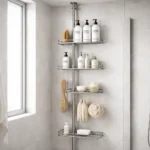
Best Damage-Free Shower Storage for Renters (2026)
December 27, 2025How to Organize Makeup in a Small Bathroom (2026 Renter Guide)
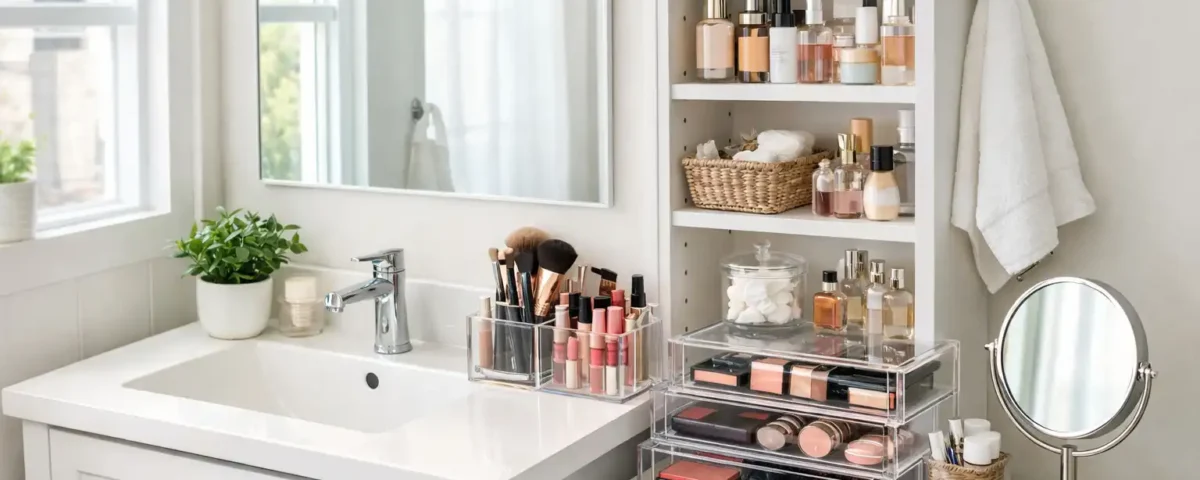
Smart makeup organization transforms even the smallest bathroom into a calm, functional space.
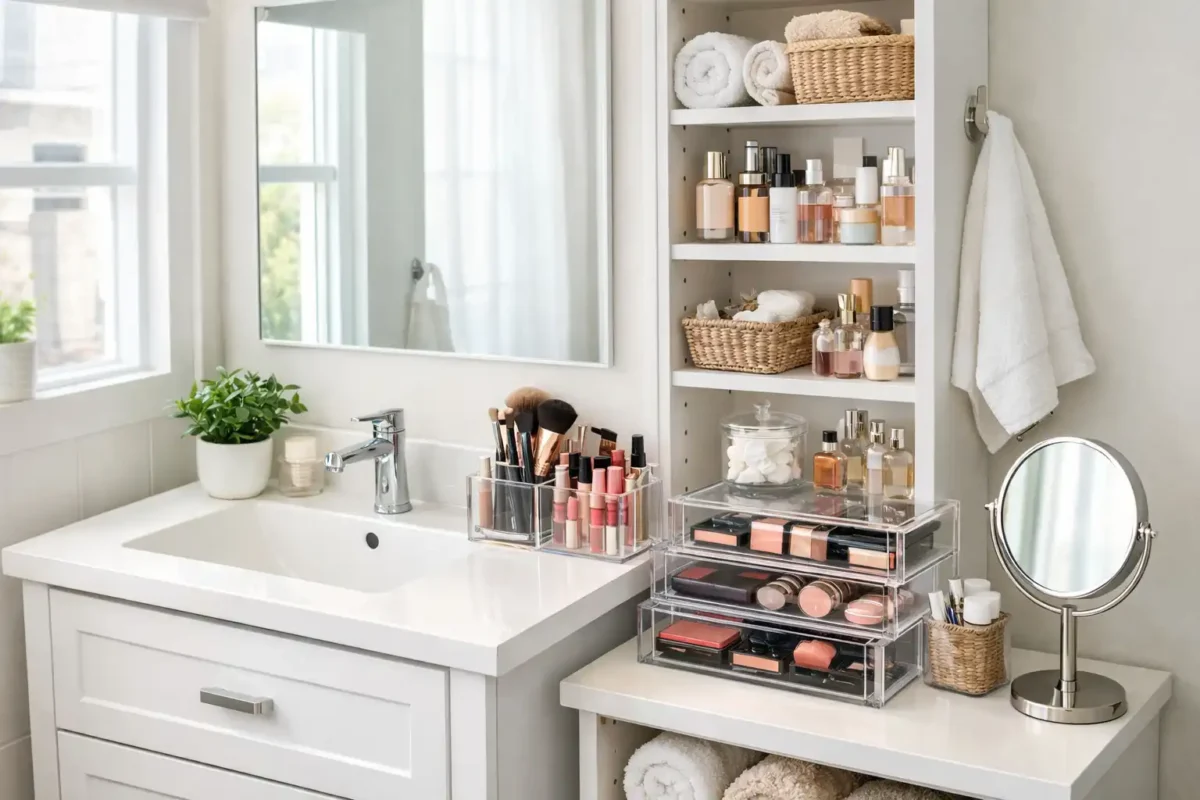
Do you start each day with a frantic search for your mascara, only to find it buried under a landslide of lipsticks and palettes? You’re not just tidying up—you’re fighting a design trend. As of 2024, 4.6% of new single-family homes feature just one full bathroom or less, a figure that has seen a steady increase, proving our living spaces are objectively shrinking. For the urban renter, the personal square footage can be as little as 393 square feet, making every inch a battleground.
The cost is more than spatial; it’s a tax on your time and biology. Research indicates the average person spends approximately 8.5 minutes per day searching for misplaced household items. For younger adults (16-24), this jumps to 11 minutes daily, totaling nearly 67 hours a year lost to disorganization. This chaotic start has a profound physiological impact. A seminal study from UCLA’s Center on Everyday Lives of Families (CELF) found a direct link between high-density household clutter and elevated cortisol levels, particularly in women. Your cluttered vanity isn’t just messy; it’s triggering a low-grade fight-or-flight response before you’ve even had your coffee.
This guide is your strategic overhaul. We’ll move beyond basic bins to a system that saves time, reduces stress, and turns your cramped bathroom into a model of serene efficiency, all backed by the latest data and design intelligence.
FTC Disclosure: This post contains affiliate links. If you purchase through these links, I may earn a small commission at no extra cost to you. All product recommendations are based on extensive research and user reviews.
The Strategic Edit—Building Your Core Collection
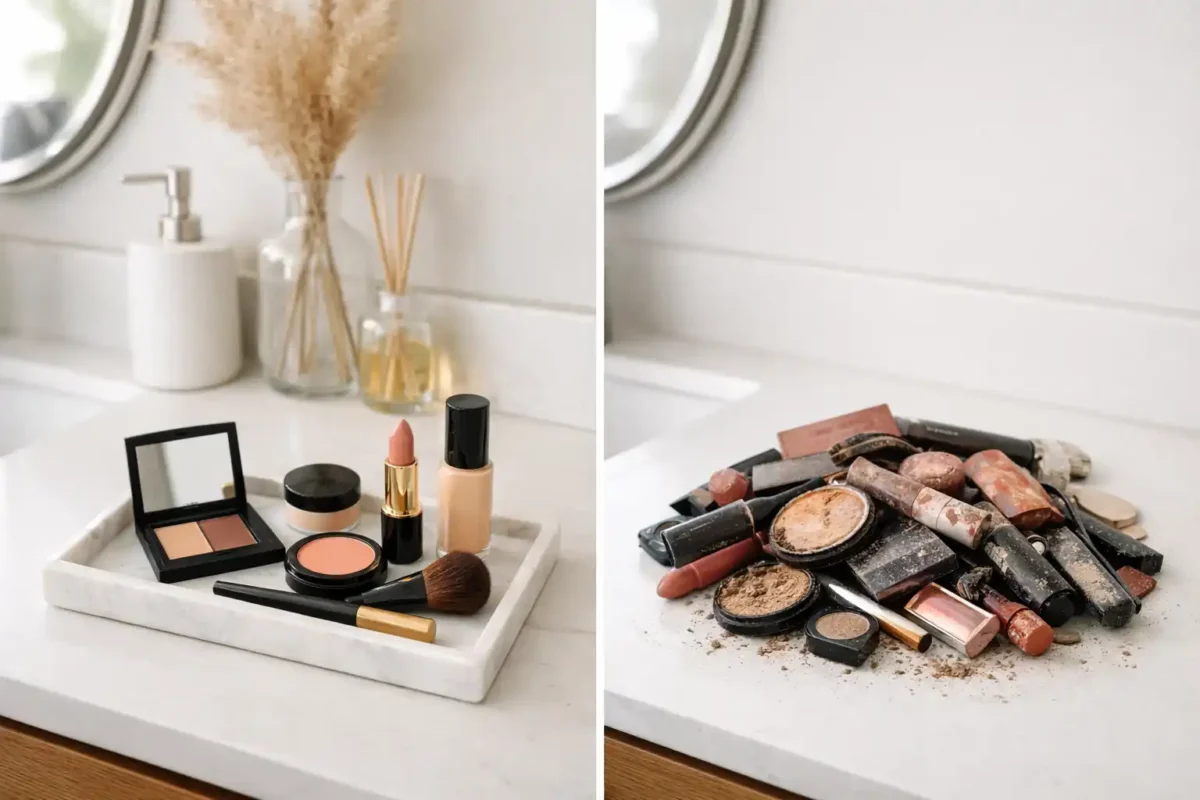
You cannot organize clutter; you can only move it. The first step is a ruthless, one-time purge to build a manageable, loved collection.
- Enforce Expiration Dates: Hygiene is non-negotiable. Toss mascara after 3-6 months, liquid foundations after 6-12 months, and powders after 2 years. Don’t guess—look for the Period After Opening (PAO) symbol, the open-jar icon with a number (e.g., 12M), on packaging.
- Apply the Six-Month Rule: If you haven’t used a product in six months, let it go. This clears out aspirational purchases and forgotten trends.
- Consolidate and Conquer: Identify and eliminate duplicates. How many nearly-identical nude lipsticks or black eyeliners do you really need? Keep the best and reclaim the space.
Master Your Space—Zoning and Vertical Warfare
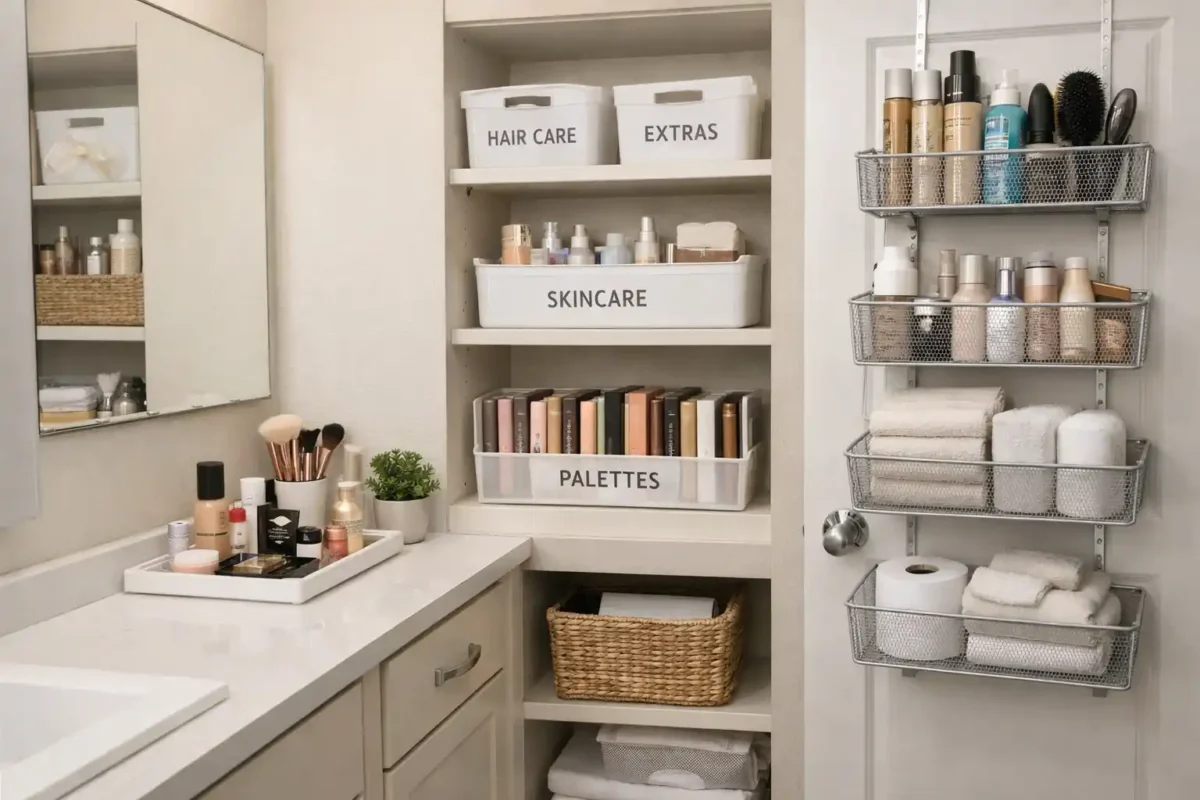
With a curated collection, it’s time to implement a professional organizer’s secret: micro-zoning. Don’t think of your bathroom as one room; think of it as a series of functional areas.
| Zone | Purpose | Ideal Location & Solutions |
|---|---|---|
| Daily Use | 5-10 core, everyday products. | Prime, eye-level real estate: a top drawer with dividers or a small, sleek tray. |
| Weekly/Occasional | Favorite palettes, special-occasion items. | Secondary storage: a higher shelf, a labeled bin in a cabinet, or the top of a vertical organizer. |
| Backstock & Refills | Unopened replacements, bulk buys. | External storage (ideal): A cool, dry bedroom drawer, far from bathroom humidity. |
Once zoned, conquer the vertical plane. This is your most powerful tool.
- Magnetic Strips: Adhesive magnetic strips inside a cabinet door hold metal makeup pans, tweezers, and scissors, turning tools into accessible wall art.
- Over-the-Door Systems: A clear over-the-door shoe organizer is a classic for palettes and sprays. For a sleeker look, install an over-the-toilet shelf unit with a slim depth of 6-8 inches to avoid overwhelming the space.
- Tiered Visibility: Use acrylic risers inside cabinets and stackable drawers to create layers. As professional organizer Laura Kinsella of Urban Organyze advises, “We want to have a bird’s eye view of our makeup, or at least be able to see what we have so nothing gets lost in the shuffle.”
2026’s Most Innovative (& Beautiful) Storage Hacks
Move beyond standard acrylic bins. These unique, aesthetic-forward ideas are what will make your space—and this guide—truly stand out.
- The Nostalgic Library: A vintage ‘90s wire CD tower is a perfect, slim-profile holder for makeup palettes, storing them vertically like books on a shelf.
- Discreet “Bread Box” Concealment: A stainless steel kitchen bread box on the toilet tank hides bulky hair tools and cords behind a roll-top lid, eliminating visual noise.
- The Sink-Cover Workspace: For pedestal sinks, a roll-up stainless steel dish drying rack laid across the basin creates an instant, removable countertop.
For the Minimalist Aesthetic:
- Mini Cake Stands: Use a small, ceramic cake stand to elevate and display your favorite perfumes or daily skincare, adding a luxe, decorative touch.
- Tiered Jewelry Stands: A beautiful 3-tiered stand can corral hair ties, daily jewelry, and lip balms on the counter without looking cluttered.
- The Vintage “Caboodle” Revival: Hunt for accordion-style vintage sewing boxes or antique cosmetic cases. They offer tiered, fold-out storage that functions as a beautiful piece of decor.
Reddit Pro-Tip: The “Shopping Bag” Capsule Method
A popular strategy in the r/makeuporganization community is the “Currently in Use” bag. Dedicate a single makeup bag or small basket to hold the products you are actively reaching for this week or month. The rest of your collection stays in a separate drawer or in your bedroom. This “capsule” method prevents you from having to dig through your entire stash every morning and makes it easy to rotate products, ensuring everything gets used.
The Expert’s Guide to Preservation and Renter Safety
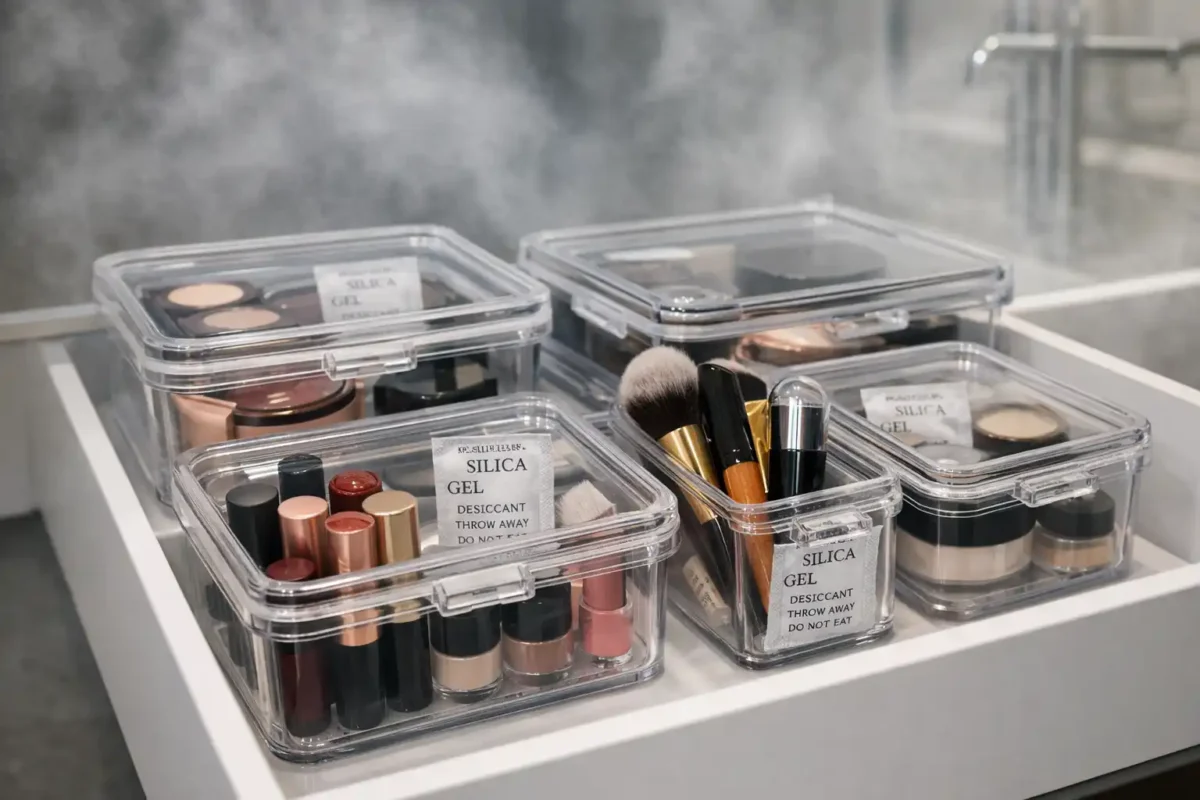
Winning the War on Humidity: The bathroom is a humidity chamber, and steam is makeup’s greatest enemy. The ideal preservation environment is a cool, dry, dark place at 60–75°F (15–24°C).
- High-Risk Products: Be extra vigilant with natural/organic formulations (which often have fewer preservatives) and powders, which are “hygroscopic” and actively absorb moisture, leading to caking.
- Active Defense: Toss silica gel packets (from new shoes or bags) into your organizers to absorb ambient moisture.
The Renter’s Safety Protocol: Protect your deposit while personalizing your space.
- The Adhesive Barrier: Before applying any heavy peel-and-stick tiles or hooks, apply a layer of removable contact paper to the wall. The adhesive bonds to the paper, not the paint.
- Clean Removal & Alternatives: When moving out, use a hairdryer to gently heat adhesive strips for several minutes before pulling. For any stubborn residue, use a plastic scraper and a citrus-based adhesive remover (never metal, which can scratch). For more tips on organizing your shower without damaging walls, check out our guide on Best Damage-Free Shower Storage for Renters. Consider tension rods under the sink or in the shower to hang spray bottles or caddies—they can hold up to 10 pounds with zero damage.
The System That Lasts & Top Product Picks
An organization fails when maintenance is a chore. The “Weekly Makeup Basket” strategy is your solution. Each Sunday, select a curated subset of products for the week ahead. This capsule lives in your daily-use zone, while the rest of your collection stays safe in a dry drawer. This solves two problems: it drastically limits daily decision fatigue and keeps most products safe from damaging steam. For drawer organizers that slide around, a dab of Museum Gel or sticky tack on the bottom will keep them securely in place.
Top 2026 Storage Picks for Tiny Bathrooms
| Product | Best For | Price (Approx.) | Key Pros | Key Cons |
|---|---|---|---|---|
| Spacekeeper Slim Cart | Toilet/Vanity Gaps | $20–$30 | Ultra-narrow (4.9″); 4 tiers of storage | Plastic finish; not for very heavy items |
| Madesmart 2-Tier Mini | Under-sink depth | $16–$20 | Slim 5″ width; removable slide-out bins | Bins are small for large palettes |
| Seropy Roll-Up Rack | Pedestal Sinks | $6–$10 | Creates instant counter space; rolls away | Requires a sink basin to sit on |
| YouCopia Hideaway | Over-toilet supplies | $35 | Discreet, maximizes vertical dead space | Design fits specific toilet tank types |
Final Thoughts: A Small Bathroom That Actually Works for You
Organizing makeup in a small bathroom isn’t about buying more containers—it’s about designing a system that respects space, humidity, and your daily routine. Once you edit down to a core collection, zone your storage, and move vertically, clutter stops being a constant battle and starts becoming a solved problem.
If you want to take this system further, start zooming out. Makeup organization works best when the entire bathroom functions as one cohesive space, not a collection of random fixes. Our Ultimate Guide to Organizing a Small Bathroom on a Budget walks you through creating a complete, renter-friendly setup—from under-sink storage to wall-mounted solutions—without overspending.
Storage challenges don’t stop at cosmetics either. If towels are eating up cabinet space or living on the back of a chair, our guide on How to Store Towels in a Tiny Bathroom shows smart folding methods and vertical towel storage ideas that free up valuable room for everyday essentials.
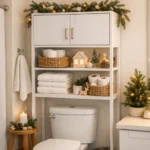
And for one of the most underused areas in any small bathroom, don’t miss 12 Over-the-Toilet Storage Ideas for Apartments. This space is ideal for backup makeup, skincare refills, and rarely used tools—especially when drawer space is limited.
A small bathroom doesn’t have to feel cramped or chaotic. With the right strategy, it can become efficient, calm, and surprisingly spacious—proof that smart organization always beats square footage.
FAQ: Your Quick-Reference Guide
How do I maximize storage in a bathroom with no drawers?
Focus on vertical and over-door solutions. Magnetic strips on walls, over-the-door clear pocket organizers, and a narrow rolling cart that fits beside the toilet can create storage without a single built-in drawer.
What is the best material for bathroom organizers?
Acrylic is the gold standard: non-porous, wipeable, and it provides visual clarity. Stainless steel is also excellent for moisture resistance. Avoid fabric, cardboard, or unsealed wood, which trap humidity.
Is it really that bad to store all my makeup in the bathroom?
For long-term product, health, and performance, yes. If necessary, store only your daily-use capsules in airtight acrylic containers. Store your entire collection—especially powders and natural products—in a bedroom drawer.
What’s one cheap organizer I already own?
Look in your kitchen. A cutlery tray turned sideways in a drawer perfectly organizes eyeliners and lip pencils. An ice cube tray in a cabinet is ideal for storing small items like hairpins.
About the Author
I’m Amina Sheikh, a renter and small-space organization enthusiast with over 9 years of experience creating practical storage solutions for compact bathrooms and vanity areas. I’ve lived in apartments where space is tight and surfaces are limited, so I focus on budget-friendly, damage-free methods for organizing makeup, skincare, and toiletries. This guide is based on hands-on trials with real products in real bathrooms, ensuring that every tip helps renters maximize space, stay organized, and maintain a clutter-free vanity without permanent fixtures.