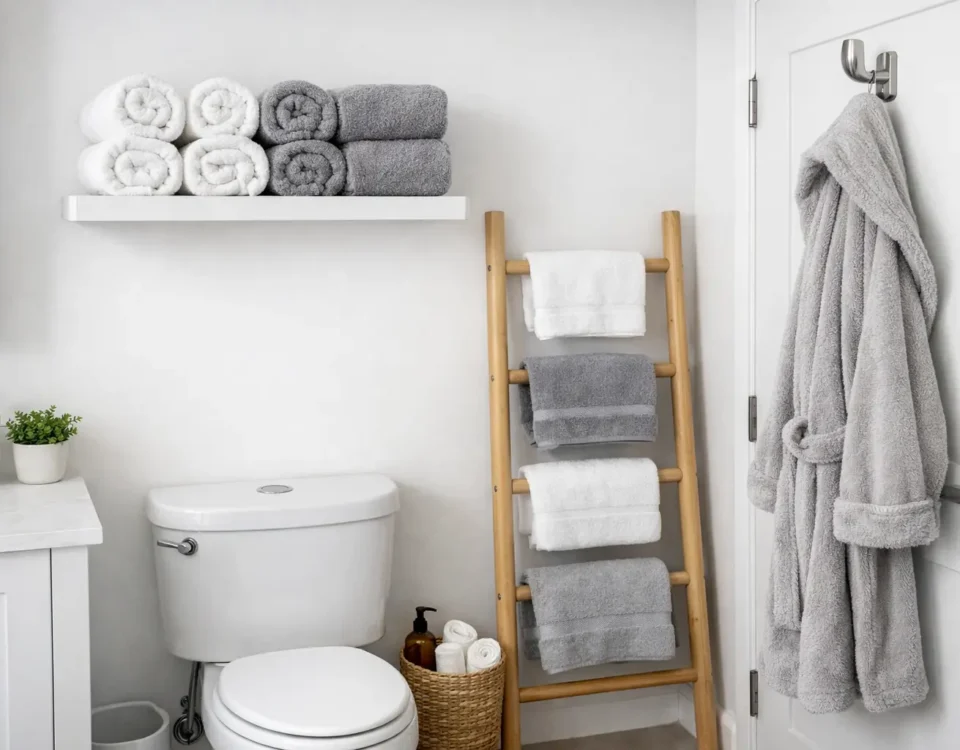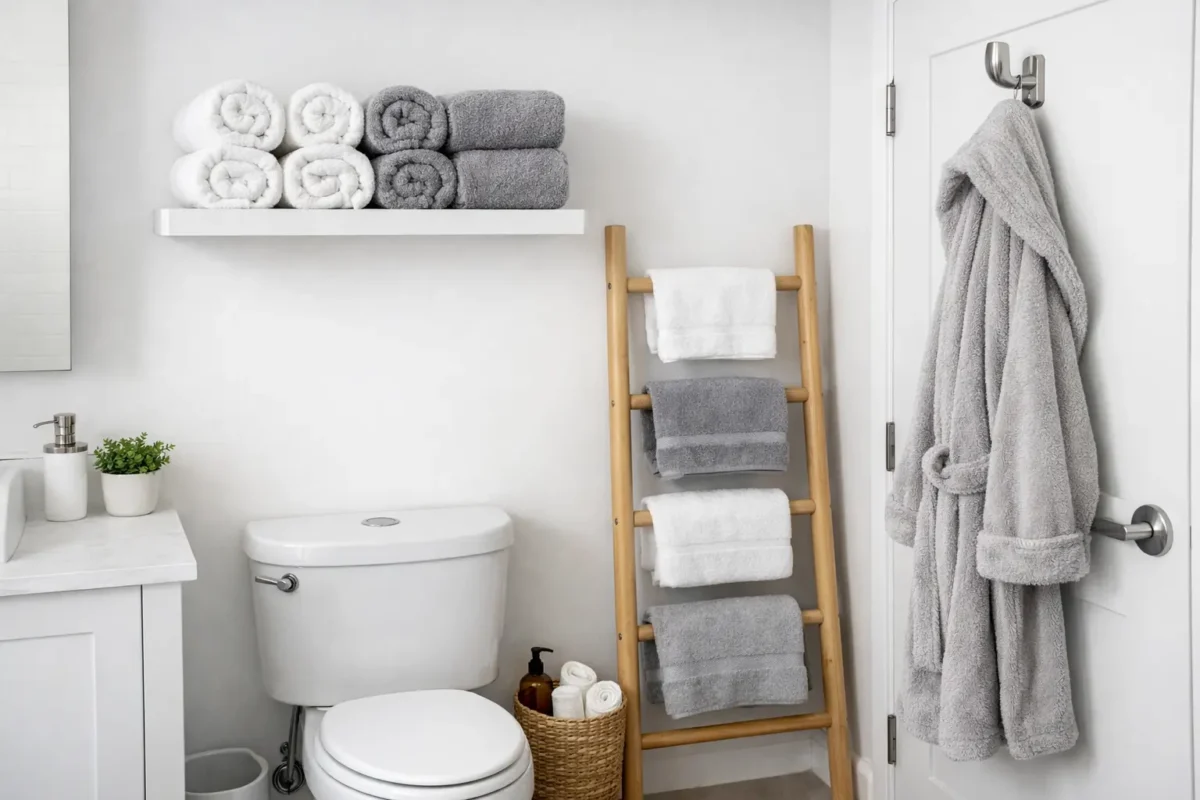
No Linen Closet? Where to Store Towels and Sheets in a Small Apartment
November 28, 2026
Renter-Safe Small Apartment Shopping List (Room by Room, No Drilling)
November 28, 2026Wall Damage and Your Security Deposit: A Renter’s Guide
Quick answer: In most US states, a few small nail or tack holes, light scuffs and faded paint count as normal wear and tear, so your landlord can’t take them out of your deposit. Large holes, lots of holes that need patching and repainting, unapproved paint colors and peeled paint from adhesive hooks are usually treated as damage you pay for. Photograph your walls on move-in day, use damage-free hanging the right way, and patch anything beyond small holes before you leave.
Affiliate disclosure: Some links below are affiliate links. As an Amazon Associate I earn from qualifying purchases, at no extra cost to you. How we choose products.
Helpful products for this guide
Picked from the problems this guide covers. These are research picks, not tested by us; check sizes against your space before you buy.
DAP DryDex Spackling
Best for: Filling small nail holes before you move out
- Fills small holes
- Dries fast
- Sandable
Watch out: Match paint after filling; check your lease.
Check price on AmazonResearch pick · we haven’t tested this one ourselvesCommand Large Picture Hanging Strips
Best for: Frames and light decor without holes
- 4 pairs hold 16 lb (3M, current US packs)
- Frames up to 24 × 36 in
- Remove by pulling straight down
Watch out: Not for wallpaper or fresh paint (wait 7 days).
Check price on AmazonSpecs from 3M · research pickCommand X-Large Hooks
Best for: Coats, robes and bags
- 10 lb and 15 lb versions, rated per hook
- Refill strips available
- No drilling
Watch out: Indoor use only; bathrooms need bath versions.
Check price on AmazonSpecs from 3M · research pickDAP DryDex Spackling
DryDex has thousands of owner reviews at Lowe’s, with a 4.7 average on the 16-ounce size. Owners keep mentioning the same things: it goes on pink and turns white when it’s ready, spreads smoothly, and sands easily. Several reviewers call it handy for renters filling nail holes before move-out. The honest limits: owners say it’s for small holes, not big patches, and a few found it needed a second coat or took about a day to fully dry. Many reviews were collected through promotions, so we weighted verified purchases more.
Owners praise
- Color change shows when it’s dry
- Spreads and sands smoothly
- Good for nail and screw holes
- Cheap
Owners complain
- Not for large holes
- May need a second coat
- Old tubs can dry out
Our research score. Very large and consistent owner base; we discounted promotional reviews.
Buy it if: you have nail holes to fill before a move-out inspection. Skip it if: you have a dent or hole bigger than a coin; use a patch kit and ask your landlord.
Based on owner reviews and expert coverage at Lowe’s owner reviews (16 oz), Lowe’s owner reviews (8 oz), Target reviews and Q&A. We read these sources in November 2026; we have not tested this product ourselves yet. How we score.
This guide is part of our renter series. If you’re still planning what to put on your walls, start with our 12 renter-friendly wall storage hacks, then come back here before you hang anything heavy.
This is general information for renters, not legal advice. Deposit rules are set by each state and by your lease, so check both.
What counts as normal wear and tear on walls?
Normal wear and tear is the slow, expected aging that happens when someone simply lives in a home. For walls, the common examples are:
- A few small nail or tack holes from hanging pictures.
- Paint that has faded, especially in sunny rooms.
- Light scuffs and minor nicks from furniture or moving.
- Hairline cracks from the building settling.
Industry and legal guides agree on these. The National Association of Realtors lists faded paint and a few small nail holes as normal wear (NAR), and Nolo’s renters’ rights guide contrasts “a few small tack or nail holes” with lots of holes or gouges that need patching and repainting (Nolo).
What counts as damage you can be charged for?
Damage is anything beyond ordinary use that needs a repair. On walls that usually means:
- Large holes from anchors, wall mounts or a door handle with no stopper.
- Many holes in one area that need patching and a repaint.
- Paint you added without permission, or a patchy paint job.
- Torn drywall paper or peeled paint from adhesive hooks pulled off the wrong way.
- Water stains, for example from watering hanging plants.
Apartments.com gives unapproved paint, dozens of nail holes and water damage from hanging plants as examples that may cost you part of your deposit (Apartments.com).
How many nail holes are “too many”?
There’s no fixed number in most laws; the test is whether the wall needs more than a light touch-up. A gallery wall of 15 frames in one area, or a TV mount with four large anchor holes, will usually need patching and paint. Three or four picture holes spread around a room usually won’t. When in doubt, ask your landlord in writing before you hang something big. A short email that says “Is it OK if I hang a mirror with two picture nails in the living room?” protects you later.
How to hang things without risking your deposit
Damage-free hooks and strips work well, but only if you follow the instructions. The common mistakes are skipping the prep and pulling them off the wrong way.
- Clean the wall with rubbing alcohol, not household cleaner or water.
- Don’t use them on fresh paint. 3M says to wait 7 days after painting and not to use Command products on paper or delicate wallpaper (3M Command FAQ).
- Stay under the weight limit printed on the pack, and don’t hang anything over your bed.
- Remove them by pulling the tab straight down, slowly, along the wall. 3M’s instructions say never to pull the strip toward you and to stretch it at least 12 inches to release it (3M instructions). Pulling outward is what tears paint.
For heavier items in the bathroom, our guide to damage-free shower storage for renters covers tension poles and suction options that don’t touch the walls at all.
How to fix small wall damage before you move out
Small repairs are cheap and take an afternoon. Do them at least a week before your final walkthrough so the paint can dry and you can check the result in daylight.
- Fill nail holes with lightweight spackle using a putty knife. Scrape it flush.
- Sand when dry with fine sandpaper (220 grit) until you can’t feel the edge.
- Touch up with the right paint. Ask your landlord or building manager for the paint brand and color. A mismatched patch can look worse than the hole.
- Remove leftover adhesive gently with a little warm air from a hair dryer, then roll it off with your thumb.
- Leave large holes and torn drywall to the landlord if your lease says repairs must be professional. Ask what they’ll charge first.
Protect your deposit on move-in day
The easiest deposit dispute to win is the one where you have dated photos. On the day you get your keys:
- Photograph every wall in every room, plus close-ups of existing holes, scuffs and stains.
- Fill in the landlord’s move-in checklist, or write your own and email it to them so it has a date.
- Keep the photos in a cloud folder you won’t delete.
Trulia’s deposit guide recommends keeping your own written notes alongside the photos if the landlord doesn’t give you a checklist (Trulia).
When will you get your deposit back?
In most states the landlord has 14 to 30 days after move-out to return the deposit, and a few states allow up to 60 days (Zillow). If they keep part of it, most states require an itemized list of the deductions. If a charge is for normal wear and tear, dispute it in writing and attach your move-in and move-out photos.
FAQ
Do Command strip marks count as damage?
If the strip comes off cleanly, there’s nothing to charge for. If it tears paint or drywall paper, many landlords treat it as damage. Removing the strip by pulling straight down, slowly, is the best way to avoid that.
Can my landlord charge me to repaint the whole apartment?
Not just because paint has aged or faded from normal living. They may charge if you painted without permission, left heavy marks, or the walls need far more than a touch-up. Check your state’s rules and your lease.
Should I patch holes myself or leave them?
Patch small nail holes yourself if you can match the paint. Leave big holes alone and ask the landlord, because a bad patch can cost more to redo.
Keeping walls clean is easier when clothes and bags have a home that isn’t a wall hook. Our renter’s closet blueprint shows a no-drill system for the closet you already have.
Sources and further reading
- National Association of Realtors: What is normal wear and tear?
- Nolo: Deducting cleaning and repair costs from a security deposit
- Zillow: How long do landlords have to return a security deposit?
- 3M Command: FAQs
Free printable: clean, repair and document your rental with our 2-page Download the Move-Out Cleaning & Deposit Checklist

Free tool: find out if adhesive will hold before you hang anything with our free adhesive hook weight checker.